Right Dumpster Size for Your Blasdell Home Renovation
What Size Dumpster Do You Need for a Home Renovation in Blasdell?
Blasdell homeowners often run into a specific problem: older homes in the village — many built in the mid-20th century — hide extra debris behind the walls. Plaster, ceramic tile, and concrete backer board add up fast, and a dumpster that looked big enough on paper fills up before the demo is done. Picking the right roll-off size from the start saves you a swap fee, a second delivery, and a headache mid-project.
The four sizes available — 10, 15, 20, and 25 yards — each fit a different renovation scope. Below is a direct project-to-size map so you can order once and move on.
Project-to-Size Quick Reference
Match your renovation type to the recommended dumpster size before you schedule delivery.
- Single-room flooring swap: 10-Yard
- Bathroom remodel (fixtures + tile): 10–15-Yard
- Drywall removal, 1–2 rooms: 15-Yard
- Full kitchen gut (cabinets, flooring, drywall): 15–20-Yard
- Roof tear-off, average Blasdell home: 20-Yard
- Multi-room renovation: 20-Yard
- Full room addition debris: 25-Yard
- Whole-house cleanout or combined trades: 25-Yard
What Does Each Dumpster Size Actually Handle?
Knowing the rough capacity of each size helps you picture whether your debris will fit — not just in volume, but in weight.
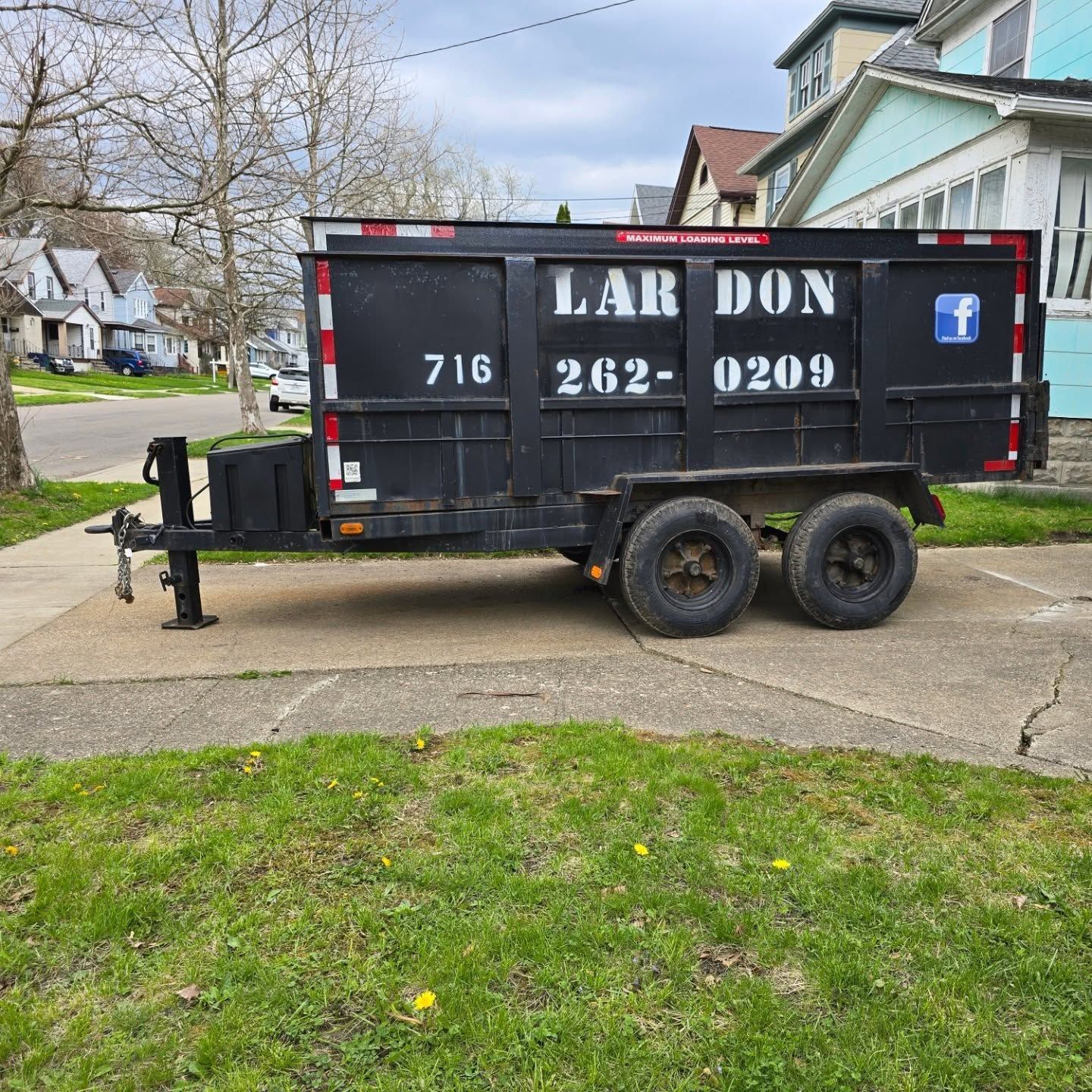
10-Yard: Think three to four pickup truck loads. This is the right call for a single bathroom tile pull, one-room flooring removal, or a minor cleanout. It fits easily on a standard Blasdell driveway. Light debris only — concrete or tile can hit the weight limit before the bin looks full.
15-Yard: Four to five truck loads. A full bathroom gut with fixtures, tile, and drywall fits here. So does a kitchen appliance and cabinet removal before the countertop and flooring work starts. If someone asks how many yards for a bathroom remodel, a 15 is usually the answer for a full gut.
20-Yard: The most commonly rented residential size. It handles a complete kitchen demo, a roof tear-off on an average-sized home, or multi-room flooring in one pull. Roof shingles are dense — confirm the weight allowance before stacking them high. For smaller Blasdell ranch homes, a 20-yard can sometimes handle a full cleanout, but larger homes will need more.
25-Yard: Built for big scopes — a room addition, a whole-house gut, or jobs where a contractor and homeowner are generating debris at the same time. Staged renovations benefit from the extra room because you're not rushing to fill and swap before the next trade starts.
For more details on size limits and what materials are allowed, review our prohibited items and size guide before you load.
Does Heavy Renovation Debris Change the Equation?
Yes — weight limits can be reached before a dumpster looks anywhere near full, especially in older Blasdell homes.
Plaster walls are significantly heavier than modern drywall. Clay and ceramic tile, concrete backer board, and mortar beds add up quickly. A bathroom floor demo that looks like a small job can push a 10-yard bin to its weight ceiling before the walls come down.
If your project involves heavy materials, size up by one or consider keeping heavy debris separate from lighter wood and drywall scraps. Mixing them throughout the bin makes it hard to judge how close you are to the weight limit.
Placing Your Dumpster on a Blasdell Property
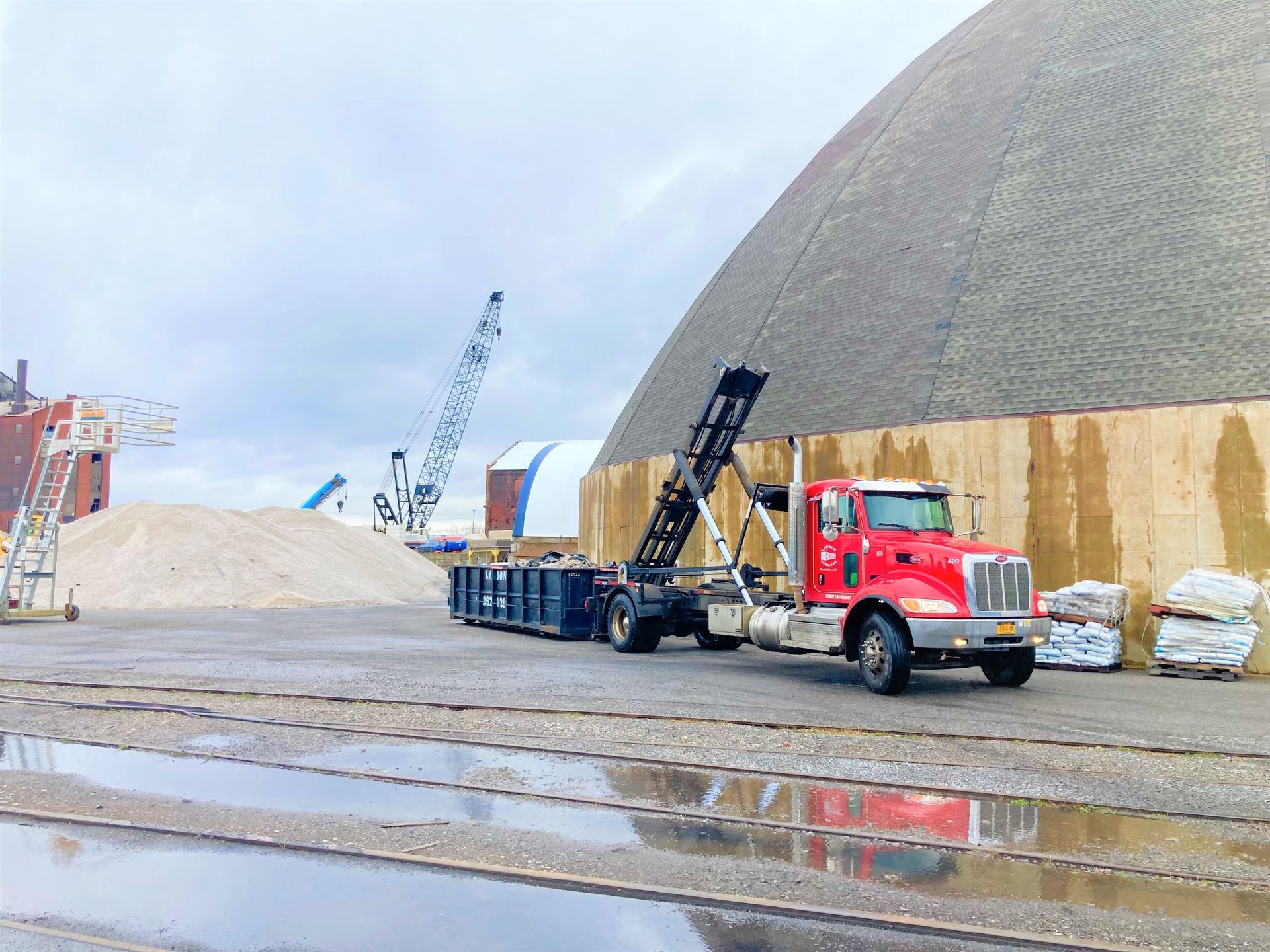
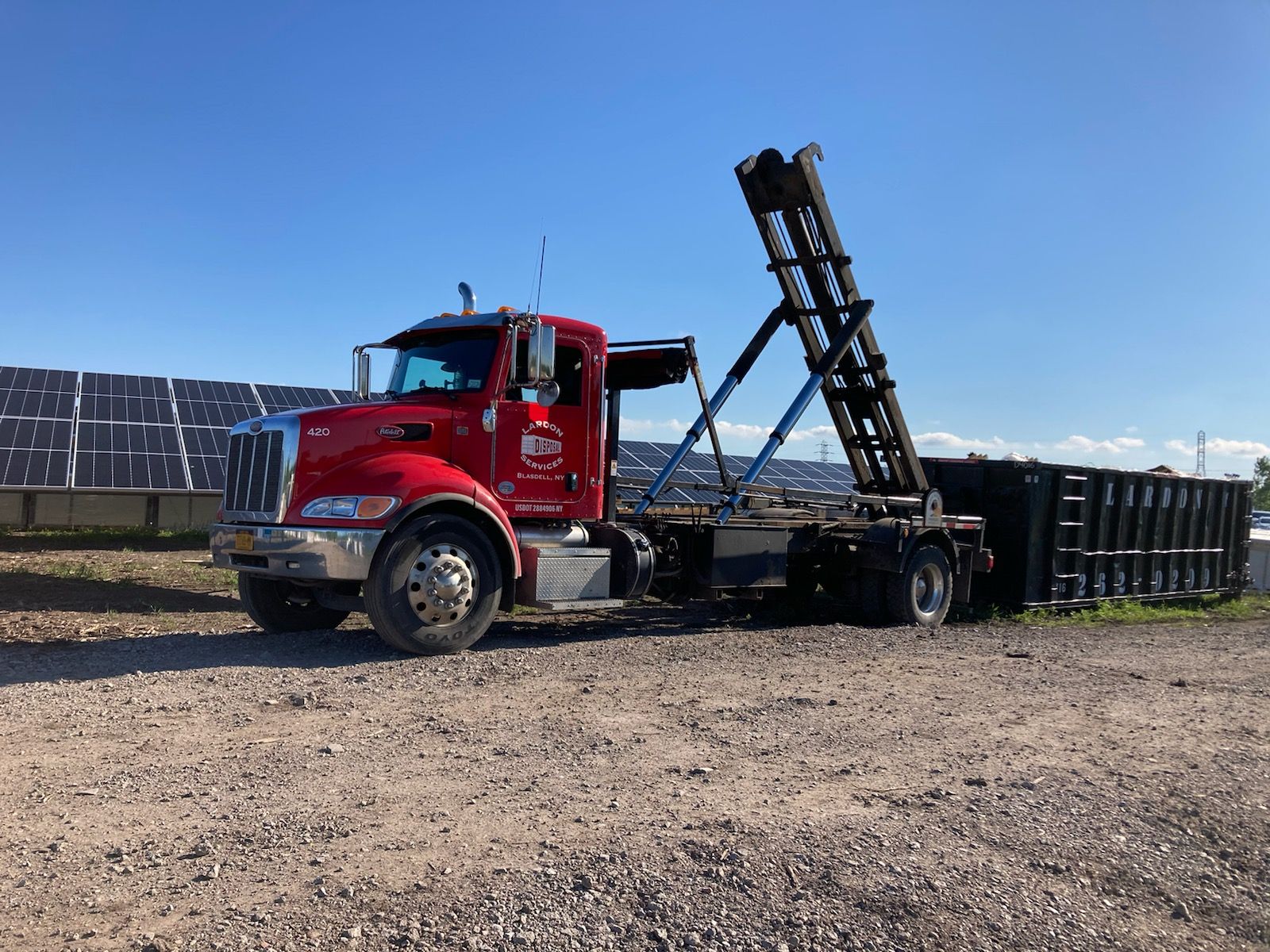
Blasdell is a compact village, and most residential lots rely on driveway placement rather than street-side drops. A roll-off truck needs roughly 60 feet of clear, straight access to make the delivery — measure your driveway before booking.
Lay plywood or boards under the dumpster to protect the driveway surface from the steel rails. If you need street placement, check with the Village of Blasdell first — a permit may be required. Also scan for low-hanging wires or tree branches before the truck arrives, since the roll-off arm extends overhead during drop-off and pickup.
What Can't Go in a Renovation Dumpster?
Hazardous materials are never allowed in a roll-off bin. This matters more in Blasdell than in newer suburbs because older homes sometimes contain asbestos in floor tiles, popcorn ceilings, and insulation wrap. If your home was built before the 1980s, test suspicious materials before demo — don't disturb them and assume they're fine.
Paint, solvents, chemicals, tires, and electronics also stay out. Sort debris on-site and keep anything hazardous separate from general demo waste from the start. Mixing it in creates a problem at disposal that will come back to you.
Timing Your Rental for a Staged Reno
Weekend flooring pulls fit a standard rental window easily. Staged projects — demo in week one, drywall in week three — benefit from asking about extended rental options at booking. It costs less to plan for the longer window upfront than to add days after the fact.
Order the dumpster one to two days before demo begins so it's in place when the first load hits. Schedule pickup after your final site sweep, not the day demo ends, to avoid a last-minute scramble.
Choosing the right dumpster size from the start keeps your Blasdell renovation on schedule — no mid-project swaps, no overflow, and no wasted spend on capacity you don't need. The size decision comes down to project scope and the weight of your specific debris.
Explore your options and get the right bin for your project by visiting helpful tips or booking directly with Lardon Disposal Service.